
With payouts disputes, cheating accusations and review manipulation becoming regular headlines, the prop trading industry has reached a tipping point.
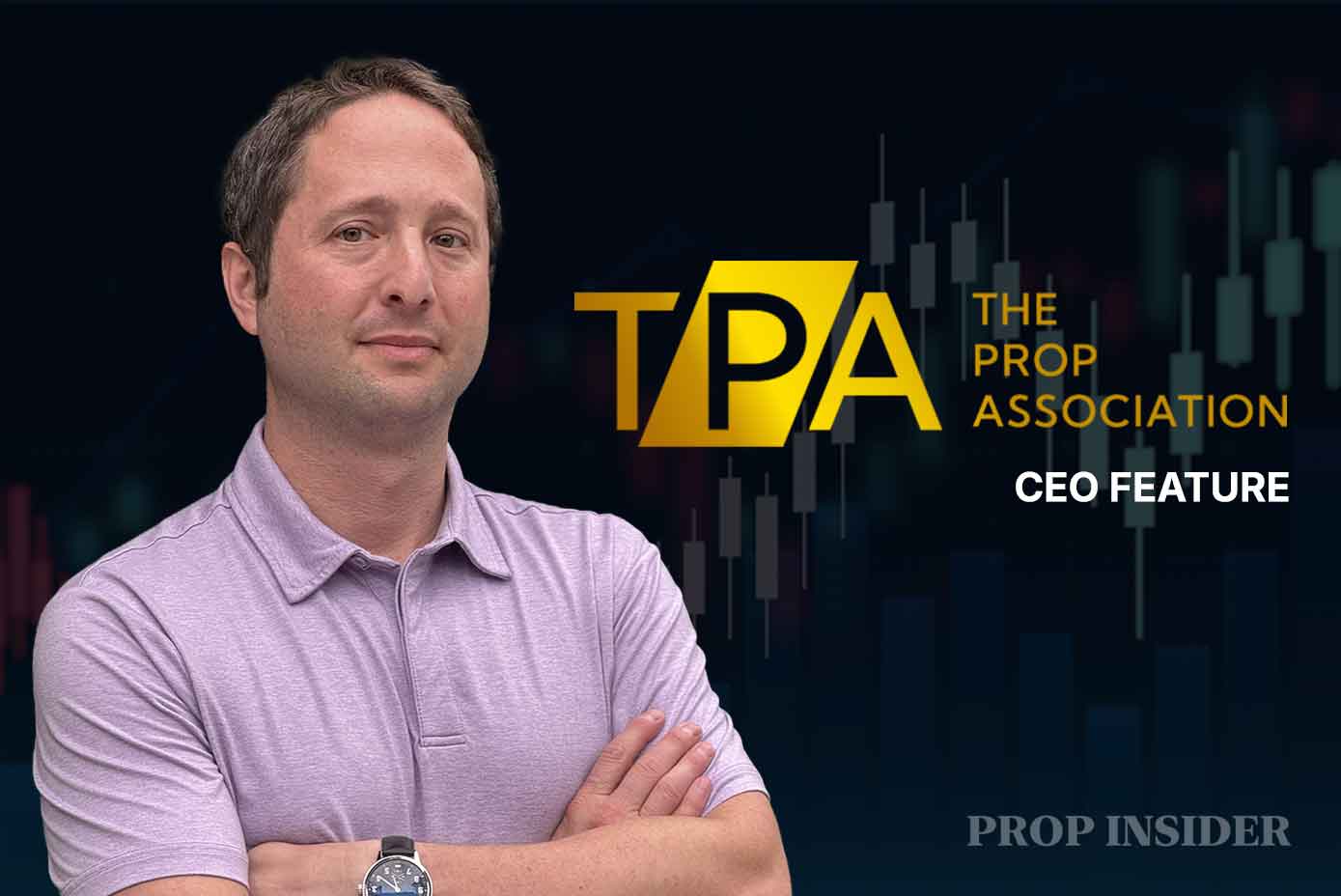
PropInsider spoke with Jordan Schneir, CEO of newly launched self-regulatory body The Prop Association (TPA), about the real issues traders and firms today are facing today and what this new organization is doing differently.
PI: TPA officially launched as a self-regulatory body in April 2025. What specific challenges in the current prop trading environment led you to take this step now?
Jordan Schneir: The prop trading industry faces two major challenges that made launching TPA necessary and timely.
First, some prop firms use manipulative practices, particularly, unfairly denying payouts to legitimate traders. When this happens, there’s no formal way for traders to dispute the decision or hold firms accountable. That lack of structure has created widespread mistrust and a race to the bottom.
TPA addresses this with our certification system, which shows traders which firms operate transparently and follow fair standards, including access to our independent dispute resolution service. Choosing TPA-certified firms gives traders protection against arbitrary decisions.
Second, reputation management has become chaotic. Good firms that enforce real rules often face coordinated online attacks, sometimes even extortion threats. Meanwhile, other firms falsely accuse traders of cheating just to avoid paying. It creates distrust from both sides.
TPA acts as a neutral third party — reviewing disputes fairly and delivering transparent decisions, whether that supports the trader or the firm. We’re also developing a Reviews Platform that filters out fake or manipulated reviews, verifying that reviewers are actual clients. It gives the industry a more honest picture of firm reputations.
The industry needs a new standard, and TPA is here to establish it.
PI: The Association offers dispute resolution, certification and educational tools. How did you decide on these three pillars as the core services of TPA?
Jordan Schneir: These three pillars were chosen because they directly target the biggest gaps in the industry.
Dispute resolution tackles the most urgent need. Right now, if a trader is denied a payout or accused of cheating, there’s no neutral body to appeal to. That creates chaos and damages reputations. Our system gives traders a legitimate voice and lets firms prove they’re being fair.
Certification is a trust signal. A TPA-certified firm is publicly showing that it’s committed to transparency and accountability. It also agrees to participate in third-party resolution if needed.
And education connects it all. Many traders don’t fully understand the rules, and some firms struggle to explain them clearly. Our educational tools help both sides avoid misunderstandings, reduce conflict, and build a healthier ecosystem.
Together, the three pillars provide structure where there was none — not just fixing problems, but preventing them.
PI: Blueberry Funded has joined as your inaugural member. How important was their early support, and what does it signal about the kind of firms you want involved?
Jordan Schneir: Blueberry Funded becoming our first official member was a huge moment not just because they’re visible in the industry, but because of what it represented.
They didn’t wait for others to go first. They saw the long-term value in transparency, accountability, and self-regulation, and committed early to help shape the future of the space. That kind of leadership matters.
Their support sends a clear message: Serious, well-managed firms don’t fear oversight; they embrace it. They want traders to know that if issues come up, they’ll be handled fairly. And they also want protection for their own reputation when decisions get twisted online.
That’s the type of firm we want at the center of TPA. Blueberry helped validate that this isn’t just a nice idea but something the industry is ready for now.
PI: There’s been some chatter online about the TPA logo bearing resemblance to the FCA’s. Was this intentional? What message are you trying to send visually with the brand identity?
Jordan Schneir: Yes, the resemblance is intentional, and we’re happy to acknowledge it.
We designed the logo to send a clear message: Professionalism, structure and accountability. The FCA has long represented regulatory clarity in the U.K. While we’re a private, non-governmental body working in a totally different capacity, we wanted our visual identity to reflect a similarly serious tone.
That said, it’s not a copy. The TPA logo uses a different typeface, structure and color palette, including a gold gradient symbolizing transparency, integrity,and evolution in the prop trading space. It’s modern and aspirational, just like the standards we’re promoting.
We didn’t want to avoid visual cues of trust — we leaned into them on purpose. Because that’s exactly what this industry has been missing.
PI: With the launch phase underway, what are the next concrete steps the TPA will take in the coming months to expand its presence and influence in the industry?
Jordan Schneir: We’re focused on growth, infrastructure, and visibility, and doing it all with precision.
First, we’ll be announcing several new member firms who have already committed to going through our certification process. These firms know the value of accountability and see it as a strategic edge.
Second, we’ve already launched the Dispute Resolution System and are now refining it — based on early feedback — to improve usability, evidence review and the overall experience. That’s key for long-term trust.
Third, we’re building out our Reviews Platform, a credible alternative to existing review sites that are flooded with bots and manipulation. Only verified traders can post, and firms can respond, with TPA oversight to keep it fair.
Lastly, we’re scaling our educational efforts: Releasing guidance docs, best practices and resources to help both traders and firms understand how to operate with more clarity and fewer conflicts.
We’re not here for attention. We’re here to build infrastructure. And we’re laying the foundation for something lasting — a more transparent, more stable prop trading ecosystem for everyone involved.
Disclaimer: The content presented herein is for informational purposes only. While efforts have been made to ensure the accuracy of the information, no guarantees are made regarding its completeness, reliability or suitability for any particular purpose. Before making any financial decisions, we strongly advise seeking guidance from a qualified professional.